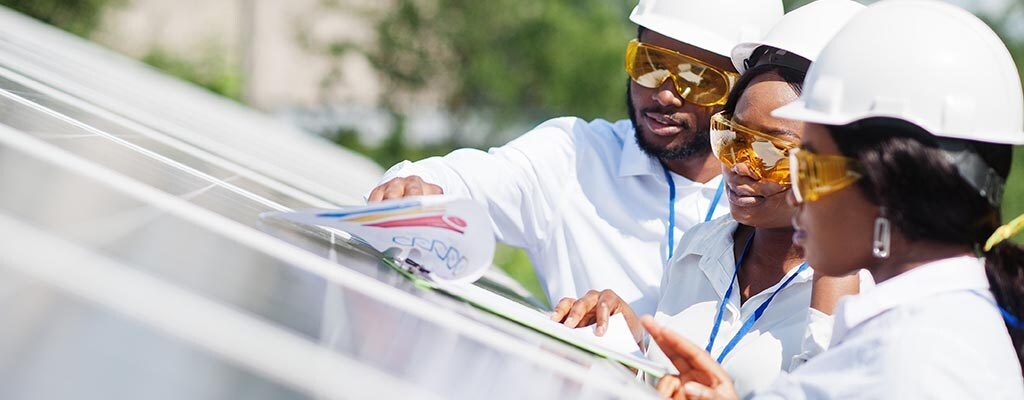
我们开发出了简洁但有弹性的连接系统,并简化了安装...从成本和可靠性的角度来看,这些效率提升确实有助于提高风力发电的竞争力。
2022年7月5日
在全球范围内,各地的社区都看到了对可再生能源的需求不断增加。 为了更好地理解这一发展,我们首先需要了解可再生能源。Thomas Schoepf 博士是TE自动化与互联生活事业部的副总裁兼首席技术官,他了解可再生能源的当前和未来状况以及采用可再生能源技术面临的障碍。“当我们提及可再生能源时,”Thomas 解释说,“我们主要指的是三种可用的一次能源 - 如水力发电、风能和太阳能。这些能源都是能够自然补给的,所以日复一日,河水流淌,阳光普照,微风吹拂。”
随着气候变化持续对世界产生负面影响,这些能源变得越来越重要。仅与天气有关的灾害的增加就说明了人类忽视全球变暖问题所付出的代价。此外,随着各国寻求消除对俄罗斯天然气的依赖,乌克兰危机有可能进一步加速可再生能源的采用。
然而,尽管需要和需求明显存在,但要全面实施将可再生能源作为主要能源的政策,我们还有很长的路要走。其中一个原因是,该行业需要一段时间才能将实施成本降低到投资回报对企业具有吸引力的水平。
Thomas 指出,“另一个挑战是风能和太阳能作为能源的不稳定性,当太阳不发光,风不吹时,就可能导致能源输出减少。”因此,可再生能源工厂需要备用能源或需要与补充能源配对。
阅读并收听对 Thomas Schoepf 博士的访谈。
What does renewable energy mean?
When we say renewable energy sources, we mean mainly freely available primary energy sources such as hydropower, wind, and solar. Those are naturally replenished. So day after day the river flows, sun shines, and the wind blows. At TE, we mainly mean solar and wind when we talk about renewables.
Why does it take a long time to implement renewables?
When we refer to the implementation, we mean the industrial implementation. From my perspective, it simply took a while to get the costs down. So, for instance, initially subsidies were necessary to install and develop scale of solar. In fact, today, the overall cost of electricity production by solar PV is already the lowest, with a more favorable return on investment in well-suited regions. So with a lot of sun.
What is helping increase demand and adoption of renewable energy?
On the one hand, renewables needed to become simply financially attractive. The average return on investment of a traditional solar farm is between 10 to 20%. Most solar farms pay off their system within 5 to 10 years, and then half at least 30 years of free electricity after that. On the other hand, people are becoming way more aware of the effects of climate change, and as we most recently also saw off the effects of our dependency on fossil fuels. In the past 50 years, we have been confronted with fivefold increase in weather-related disasters, which are now happening way closer to home and have put an intense focus on finding more sustainable solutions by organizations, governments, communities across the planet. And what I also want to mention is that the most recent Ukraine crisis has the potential to further accelerate Europe's trend toward renewables as it seeks to reduce its reliance on Russian gas.
Which lesser constraints are affecting the adoption of renewable energy technologies?
One is the volatility of wind and solar as energy sources. Since the sun is not always shining and the wind not always blowing, during these times, the energy output is less than the installed nameplate power of a wind turbine or a solar farm. And as a result, these plants need a backup power source, such as, for instance, a large scale storage. Or they can also be paired with other energy sources that can fill in during these times. Solar farms, for instance, have a capacity between 10 to 25%. And that means that, depending upon the location, they are producing maximum power more than 10 to 25% of the time during the year. Nuclear power in comparison is at 90%, hence about 3.5 times more reliable than solar. And to give you another example, the largest offshore wind farm in the world at the moment is Hornsea 2 in the North Sea that has an installed power of 1.2 gigawatts. And if we assume a capacity of about 40%, then we can expect it to power about 400,000 homes in the US or 1.1 million homes in the EU.
What is a customizable trunk solution and how is it helping evolve solar farms?
With the customizable trunk solution, we could slash the installation cost by up to 40%. And this can be a major deciding factor, whether many of these projects ever become a reality. And with it, we have simplified conventional solar farm architecture by combining the solar strings directly at the trunk connection, and hereby reducing the number of cable runs required. This also allows for the centralization of disconnect boxes, clustering them at the inverter pad, which further improves safety, efficiency, and total cost of ownership of the solar farm. And as a result, our customers have saved millions of dollars in materials, installation, maintenance costs, as well as savings from running more efficient operations.
How has wind power changed over time, and what contributions has TE made to this evolution?
Wind turbines have increased in size from about three megawatts in 2010, up to 14 megawatts today, and they are projected to deliver 20 megawatts by 2030. The largest turbine in the world today is the Haliade-X, a 14-megawatt turbine with a capacity factor of 60 to 64%. It can power one UK household for two days in just one rotation. And the trend is clearly towards offshore wind generation because wind speeds offshore tend to be steadier than on land, hence yielding a more reliable source of energy. In the meanwhile, demand for onshore wind has declined as turbines have steadily grown in size, amplifying resistance from the general public, and adding complexity to meeting local regulations. So, for instance, in Germany, turbines must be 10 times their height away from the closest home.
Getting to your question on the contribution of TE: at TE, we have contributed with the proper connectivity solutions in terms of size, voltage level, and reliability, of course. These turbines and connections need reliable performance while withstanding constant abuse from corrosive saltwater and worsening storms. It's also immensely expensive to fly personnel and equipment out via helicopter for installation. These challenges increase the importance of addressing maintenance needs quickly, reliable, and as infrequently as possible. Also, the more that can be pre-installed, the better. We have developed streamlined yet resilient connection systems with simplified installation to address these challenges and minimize costs. For instance, only one worker is needed to mount our high voltage switchgear connector for offshore turbines. And these efficiencies really help make wind power more competitive from both a cost and reliability standpoint compared to traditional energy sources and incentivize stakeholders to make the transition. All the while, we work constantly to develop solutions that will serve increased power generation capacity and further forms of renewable generation, such as floating wind farms.
How do TE product designs address the needs of renewable systems installers?
TE has been in the energy business for more than 60 years and has always been working closely with installers, understanding their needs and pain points, total cost of ownership - basically it's in TE's DNA to consistently develop solutions that address those. The Customizable Trunk Solution for solar or the high voltage switchgear connector for offshore wind turbines, both allow for simplified installation and provide significant savings at highest reliability. On top of that, we have a professional training program for installers, globally, we have been training more than 2,500 participants annually on high and medium voltage products.
What does maturity in renewable technologies look like and what's driving it?
Available space for setting up renewables is becoming more and more a challenge. Hence the trend to floating offshore solutions for both wind and solar. These come with new and more demanding challenges, with increased environmental requirements for the connections as well as higher voltages to deal with. I mean, today, we are at 72 kilovolts for high voltage connections, and for the next generation we are talking 132 kilowatts. That's about double. This is exciting for every engineer. Once again, we can be at the forefront of technology with new materials, connector designs, monitoring systems, and with that, contribute to a better, more sustainable world.
What can we expect to see more of in the future?
I believe that we can expect more symbiotic relation between capacity and demand. So our energy networks, knowing where, what, and how much energy is available on the one hand and on the other hand, where is what and how much demand? Hence, source and load management systems will work closer together for seamless operation so that the power stays on. The power grid now must cope with an increasing number of more difficult to predict renewable energy sources. And we talked about this a little bit before. And at the same time, electricity is taking a more central role in fulfilling our everyday needs, including the mobility. Just think of the electric vehicles now, lighting, cooking, heating, and cooling. And with this, I believe that the digital technologies will play an increasingly essential role requiring a higher number of sensors at critical connection points in the power and distribution grid. And this is also why at TE, our connectivity components have already been developed with integrated or retrofit sensor technologies.
您喜欢这次访谈吗?阅读原文。

在当今紧迫的气候对话中,太阳能光伏和风能等可再生能源问题已是人们关注的焦点。随着各国政府加快采取限制碳排放政策的步伐,创新的清洁技术正在帮助人们大量采用可再生能源。
深入了解使环保替代品更加可靠、更具成本效益的技术。
我们开发出了简洁但有弹性的连接系统,并简化了安装...从成本和可靠性的角度来看,这些效率提升确实有助于提高风力发电的竞争力。
2022年7月5日
在全球范围内,各地的社区都看到了对可再生能源的需求不断增加。 为了更好地理解这一发展,我们首先需要了解可再生能源。Thomas Schoepf 博士是TE自动化与互联生活事业部的副总裁兼首席技术官,他了解可再生能源的当前和未来状况以及采用可再生能源技术面临的障碍。“当我们提及可再生能源时,”Thomas 解释说,“我们主要指的是三种可用的一次能源 - 如水力发电、风能和太阳能。这些能源都是能够自然补给的,所以日复一日,河水流淌,阳光普照,微风吹拂。”
随着气候变化持续对世界产生负面影响,这些能源变得越来越重要。仅与天气有关的灾害的增加就说明了人类忽视全球变暖问题所付出的代价。此外,随着各国寻求消除对俄罗斯天然气的依赖,乌克兰危机有可能进一步加速可再生能源的采用。
然而,尽管需要和需求明显存在,但要全面实施将可再生能源作为主要能源的政策,我们还有很长的路要走。其中一个原因是,该行业需要一段时间才能将实施成本降低到投资回报对企业具有吸引力的水平。
Thomas 指出,“另一个挑战是风能和太阳能作为能源的不稳定性,当太阳不发光,风不吹时,就可能导致能源输出减少。”因此,可再生能源工厂需要备用能源或需要与补充能源配对。
阅读并收听对 Thomas Schoepf 博士的访谈。
What does renewable energy mean?
When we say renewable energy sources, we mean mainly freely available primary energy sources such as hydropower, wind, and solar. Those are naturally replenished. So day after day the river flows, sun shines, and the wind blows. At TE, we mainly mean solar and wind when we talk about renewables.
Why does it take a long time to implement renewables?
When we refer to the implementation, we mean the industrial implementation. From my perspective, it simply took a while to get the costs down. So, for instance, initially subsidies were necessary to install and develop scale of solar. In fact, today, the overall cost of electricity production by solar PV is already the lowest, with a more favorable return on investment in well-suited regions. So with a lot of sun.
What is helping increase demand and adoption of renewable energy?
On the one hand, renewables needed to become simply financially attractive. The average return on investment of a traditional solar farm is between 10 to 20%. Most solar farms pay off their system within 5 to 10 years, and then half at least 30 years of free electricity after that. On the other hand, people are becoming way more aware of the effects of climate change, and as we most recently also saw off the effects of our dependency on fossil fuels. In the past 50 years, we have been confronted with fivefold increase in weather-related disasters, which are now happening way closer to home and have put an intense focus on finding more sustainable solutions by organizations, governments, communities across the planet. And what I also want to mention is that the most recent Ukraine crisis has the potential to further accelerate Europe's trend toward renewables as it seeks to reduce its reliance on Russian gas.
Which lesser constraints are affecting the adoption of renewable energy technologies?
One is the volatility of wind and solar as energy sources. Since the sun is not always shining and the wind not always blowing, during these times, the energy output is less than the installed nameplate power of a wind turbine or a solar farm. And as a result, these plants need a backup power source, such as, for instance, a large scale storage. Or they can also be paired with other energy sources that can fill in during these times. Solar farms, for instance, have a capacity between 10 to 25%. And that means that, depending upon the location, they are producing maximum power more than 10 to 25% of the time during the year. Nuclear power in comparison is at 90%, hence about 3.5 times more reliable than solar. And to give you another example, the largest offshore wind farm in the world at the moment is Hornsea 2 in the North Sea that has an installed power of 1.2 gigawatts. And if we assume a capacity of about 40%, then we can expect it to power about 400,000 homes in the US or 1.1 million homes in the EU.
What is a customizable trunk solution and how is it helping evolve solar farms?
With the customizable trunk solution, we could slash the installation cost by up to 40%. And this can be a major deciding factor, whether many of these projects ever become a reality. And with it, we have simplified conventional solar farm architecture by combining the solar strings directly at the trunk connection, and hereby reducing the number of cable runs required. This also allows for the centralization of disconnect boxes, clustering them at the inverter pad, which further improves safety, efficiency, and total cost of ownership of the solar farm. And as a result, our customers have saved millions of dollars in materials, installation, maintenance costs, as well as savings from running more efficient operations.
How has wind power changed over time, and what contributions has TE made to this evolution?
Wind turbines have increased in size from about three megawatts in 2010, up to 14 megawatts today, and they are projected to deliver 20 megawatts by 2030. The largest turbine in the world today is the Haliade-X, a 14-megawatt turbine with a capacity factor of 60 to 64%. It can power one UK household for two days in just one rotation. And the trend is clearly towards offshore wind generation because wind speeds offshore tend to be steadier than on land, hence yielding a more reliable source of energy. In the meanwhile, demand for onshore wind has declined as turbines have steadily grown in size, amplifying resistance from the general public, and adding complexity to meeting local regulations. So, for instance, in Germany, turbines must be 10 times their height away from the closest home.
Getting to your question on the contribution of TE: at TE, we have contributed with the proper connectivity solutions in terms of size, voltage level, and reliability, of course. These turbines and connections need reliable performance while withstanding constant abuse from corrosive saltwater and worsening storms. It's also immensely expensive to fly personnel and equipment out via helicopter for installation. These challenges increase the importance of addressing maintenance needs quickly, reliable, and as infrequently as possible. Also, the more that can be pre-installed, the better. We have developed streamlined yet resilient connection systems with simplified installation to address these challenges and minimize costs. For instance, only one worker is needed to mount our high voltage switchgear connector for offshore turbines. And these efficiencies really help make wind power more competitive from both a cost and reliability standpoint compared to traditional energy sources and incentivize stakeholders to make the transition. All the while, we work constantly to develop solutions that will serve increased power generation capacity and further forms of renewable generation, such as floating wind farms.
How do TE product designs address the needs of renewable systems installers?
TE has been in the energy business for more than 60 years and has always been working closely with installers, understanding their needs and pain points, total cost of ownership - basically it's in TE's DNA to consistently develop solutions that address those. The Customizable Trunk Solution for solar or the high voltage switchgear connector for offshore wind turbines, both allow for simplified installation and provide significant savings at highest reliability. On top of that, we have a professional training program for installers, globally, we have been training more than 2,500 participants annually on high and medium voltage products.
What does maturity in renewable technologies look like and what's driving it?
Available space for setting up renewables is becoming more and more a challenge. Hence the trend to floating offshore solutions for both wind and solar. These come with new and more demanding challenges, with increased environmental requirements for the connections as well as higher voltages to deal with. I mean, today, we are at 72 kilovolts for high voltage connections, and for the next generation we are talking 132 kilowatts. That's about double. This is exciting for every engineer. Once again, we can be at the forefront of technology with new materials, connector designs, monitoring systems, and with that, contribute to a better, more sustainable world.
What can we expect to see more of in the future?
I believe that we can expect more symbiotic relation between capacity and demand. So our energy networks, knowing where, what, and how much energy is available on the one hand and on the other hand, where is what and how much demand? Hence, source and load management systems will work closer together for seamless operation so that the power stays on. The power grid now must cope with an increasing number of more difficult to predict renewable energy sources. And we talked about this a little bit before. And at the same time, electricity is taking a more central role in fulfilling our everyday needs, including the mobility. Just think of the electric vehicles now, lighting, cooking, heating, and cooling. And with this, I believe that the digital technologies will play an increasingly essential role requiring a higher number of sensors at critical connection points in the power and distribution grid. And this is also why at TE, our connectivity components have already been developed with integrated or retrofit sensor technologies.
您喜欢这次访谈吗?阅读原文。
在当今紧迫的气候对话中,太阳能光伏和风能等可再生能源问题已是人们关注的焦点。随着各国政府加快采取限制碳排放政策的步伐,创新的清洁技术正在帮助人们大量采用可再生能源。
深入了解使环保替代品更加可靠、更具成本效益的技术。