
我认为,我们必须在业界采取整体综合方法。整体方法意味着我们必须考虑可持续的未来。我们如何才能实现零排放?
2022年3月29日
“我们现在正处于一个充满活力的时期。 我们称之为新常态,在新常态下,我们看到了大量的新参与者,”曾担任TE交通运输解决方案首席技术官 (CTO) 的行业专家Ralf Klädtke解释道。“所有的传统车企都面临压力。
今天的想法和发现是鼓舞人心的创新,可以在推动电动汽车实现完全自动驾驶的过程中发挥作用。在Ralf关于无人驾驶汽车的三部分访谈系列的最后一部分,他指出,“我们看到电子公司和软件公司进入该市场。我们看到汽车电气化趋势,这为车轮上的计算机开辟了全新的道路。”
阅读并收听对 Ralf Klädtke 的访谈。
How are new industry players impacting autonomy as a technology driver?
Actually, we are in a totally fascinating time right now. We call it the new normal and in the new normal we see a huge amount of new players, so it's amazing. All the traditional car companies are under pressure. We see now electronic companies entering into the game, software companies. We see the electrification of the cars, and that is opening totally new avenues for computer on wheels. So that is an absolutely new playground. And when we talk about autonomous driving, I think it's really...I would say, two different approaches at the moment in order to get to autonomy. We see one set of companies saying that, okay, today you drive a self-human driven car 70,000 km without an accident. When we can do 80,000 or 90,000 km without an accident, we are better than a human driver and that is good enough. So, this is very much the innovative, very accelerating companies. And then there's more the traditional set of companies that say, hey, even if I could do 80 or 90,000 km without an accident, if I would hit a human person to die, this is not acceptable. So therefore, they take a much more safer approach, a much more conservative approach. And those two are kind of battling a little bit right now. So, we see the two different players. On that perspective, I think we will see that now with all the electric cars, we will see a lot of autonomy, automated autonomous cars coming on the road step by step. And we see that sustainability is really taking a much stronger share into the future. The electric cars are enablers. We see electric autonomous cars and sustainability is a very strong focus that comes together with all of that.
How might autonomous vehicles change the economics of commercial transportation?
The commercial transportation economics will certainly change a lot because here the gain, the economics gain is the biggest. We see that right now in the race for autonomy, the trucks are really passing the passenger cars because here economics are completely different. We see that in this new normal, the supply chains that are important for our economy are breaking. So our logistics chains are breaking. Therefore, the smart logistics chain with autonomous trucks, autonomous drones, robots kick in very strongly. Autonomy in the air, autonomy on the sea with the ship is easy because it's a very controlled environment, easy to gain. When we get now to the autonomous trucks, we talked about already 45% of savings of the total cost of ownership. We have a driver shortage. We don't get enough drivers anymore. So it's all about our economy and about the economy and the economics on commercial vehicles. This is a big, big step forward.
On the passenger cars, when we talk about economy, I think it's still about the luxury of being chauffeured, enjoying the drive, reading a book, taking a nap. But here on the economics, the people are not ready to pay a huge amount of extra, so they're not ready to pay $20,000 - $30,000 or euros extra for this kind of luxury. We're talking about maybe $1,000, maybe $2,000. And this is right now the gain that you have for the level two plus. So for the automated driving, additional safety, some additional features, that's an open route. We see growth rates of 20% per year until 2028, according to the current forecast. This is going to happen. But the fully autonomous passenger cars, the market still feels very small on economy.
What is the connection between electric vehicles and autonomous vehicles?
My current feeling is that especially in this new environment, the electric vehicles allow to start a complete new platform. We saw in the past cars with a combustion engine with 3,200 wiring harness circuits, with 120 to 150 electronic control unit boxes. So very diversified architectures. When you go now to an electric vehicle, you have the chance to break that. Right now we talk about server architectures, domain controllers, so much more computer on wheels with a totally different architecture. And this more centralized architecture allows to provide the software, the processing capabilities, the sensors to enable for autonomous driving. Therefore the electric car, the new platforms, are an enabler for autonomous driving. I think this environment of more software, more electronics coming into it, switching to Ethernet with one gigabit per second, 25 gigabit per second of processing speed on the Ethernet, and with sensors that already need six gigabit for a camera, that is much more easy to implement for the new architectures that are coming now with the electric vehicles. Therefore, my best guess would be that electric vehicles will turn into automated level two plus very quickly because that's an easy, easy step into that technology. And therefore I think the electric vehicle will be sustainable, autonomous, and will take a big step forward into the increased safety mission to zero fatalities and mission to zero emissions.
How is mobility-as-a-service influenced by autonomous vehicles?
Just imagine how we operate cars today. So what do you think how many percentages really a car is being utilized? So, even I was surprised. I didn't know that. I know a car is parked. It's not used all the time, but it's only 4% of the lifetime that the car is utilized. Only 4%. On the other hand, we spend 50 billion hours in traffic jams each year. So, the point is, when we talk about autonomous driving and just imagine the inner circle of a megacity, we would turn to autonomous cars everywhere. That would mean that you call a car and mobility as a service. The car comes to your house, so it's operating all the way to your house. It brings you to where you need, and when it's finished, it goes to the next one. You can individualize when you enter the car with an artificial intelligence. Even with an avatar, you watch a movie, you get to the autonomous car. You can seamlessly continue to watch your movie and the car is being utilized nearly 100%. You only need to stop it for recharge and refueling. So, the mobility as a service service, what we see today is okay, there are cars you can share, but I want to share a car and I'm at home at the moment without autonomy. Where's the next car? I might need a taxi to get there to the car. I might need a train to get to that car. The autonomy gives you the next level of mobility as a service, because you don't have to get to the point where you can pick up a car or any kind of mobility device. Mobility comes to your home, it delivers where you need it, and the utilization rate goes significantly up from the only 4% to close to 100% minus some recharging, refueling, whatever you need.
How is TE partnering with OEMs to advance vehicle autonomy?
TE Connectivity is a world leading provider of connectivity and sensor solutions. Therefore we analyze in detail all the megatrends. We see what are the mobility trends. So, mobility trends go towards electrification, sustainability, connectivity, autonomy. And we at TE provide for example Ethernet with currently 25 gigabit per second. On commercial devices, we are already at 112 gigabit per second. We provide sensors. We provide camera connectivity. So based on that, TE is an enabler of advancing autonomy for our customers. We develop solutions that enable extreme data rates and processing speed required to operate the autonomous vehicles safely. On the other hand, we electrify cars. We provide 800V, 1000V, 800 amps, whatever is needed to get into that mission to zero fatalities, mission to zero emissions. And we are really teaming up with our OEMs, with our car makers, in order to work as partners to enable the latest mobility trends, the latest developments in the new architectures in electrification, autonomy, and all the areas that count right now.
Where is the industry now and where is it going?
I think we initially started with the race towards autonomous driving. I cannot say it's a race. I think it's not important whether it's a race. I think it's important that we as an industry take a holistic approach. A holistic approach means we think about our sustainable future. How can we get to zero emissions? We think about all the humans that are fatalities in traffic, 1.3 million people dying every year in traffic. So, autonomous safety is what is important. What really counts is that we as an industry can provide the maximum with our OEM partners in making cars safer, making cars sustainable, going to the electrification route, and to really have zero emissions and zero fatalities and do all what we can. We have in total in transportation solutions, more than 6,000 engineers that make sure that we meet or exceed the requirements of our customers and technology partners on that mission to zero emissions and zero fatalities.
您喜欢这次访谈吗?阅读原文。
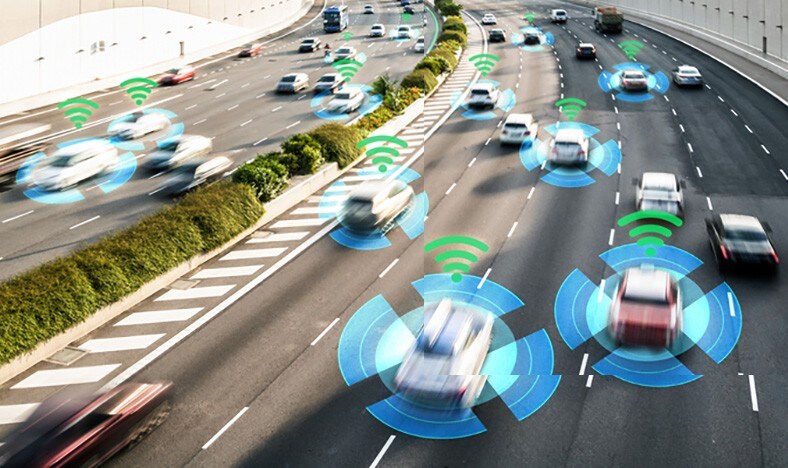
在实现车辆无人驾驶的竞赛中,乘用车、车队卡车或自动驾驶出租车等哪种车型获胜并不重要。真正重要的是,作为一个行业,我们需要采取全面的方法来开发无人驾驶技术,以解决可持续性和道路安全问题,同时实现零死亡。
实现 5 级汽车无人驾驶意味着要应对最初未想到的挑战。了解相关信息。
我认为,我们必须在业界采取整体综合方法。整体方法意味着我们必须考虑可持续的未来。我们如何才能实现零排放?
2022年3月29日
“我们现在正处于一个充满活力的时期。 我们称之为新常态,在新常态下,我们看到了大量的新参与者,”曾担任TE交通运输解决方案首席技术官 (CTO) 的行业专家Ralf Klädtke解释道。“所有的传统车企都面临压力。
今天的想法和发现是鼓舞人心的创新,可以在推动电动汽车实现完全自动驾驶的过程中发挥作用。在Ralf关于无人驾驶汽车的三部分访谈系列的最后一部分,他指出,“我们看到电子公司和软件公司进入该市场。我们看到汽车电气化趋势,这为车轮上的计算机开辟了全新的道路。”
阅读并收听对 Ralf Klädtke 的访谈。
How are new industry players impacting autonomy as a technology driver?
Actually, we are in a totally fascinating time right now. We call it the new normal and in the new normal we see a huge amount of new players, so it's amazing. All the traditional car companies are under pressure. We see now electronic companies entering into the game, software companies. We see the electrification of the cars, and that is opening totally new avenues for computer on wheels. So that is an absolutely new playground. And when we talk about autonomous driving, I think it's really...I would say, two different approaches at the moment in order to get to autonomy. We see one set of companies saying that, okay, today you drive a self-human driven car 70,000 km without an accident. When we can do 80,000 or 90,000 km without an accident, we are better than a human driver and that is good enough. So, this is very much the innovative, very accelerating companies. And then there's more the traditional set of companies that say, hey, even if I could do 80 or 90,000 km without an accident, if I would hit a human person to die, this is not acceptable. So therefore, they take a much more safer approach, a much more conservative approach. And those two are kind of battling a little bit right now. So, we see the two different players. On that perspective, I think we will see that now with all the electric cars, we will see a lot of autonomy, automated autonomous cars coming on the road step by step. And we see that sustainability is really taking a much stronger share into the future. The electric cars are enablers. We see electric autonomous cars and sustainability is a very strong focus that comes together with all of that.
How might autonomous vehicles change the economics of commercial transportation?
The commercial transportation economics will certainly change a lot because here the gain, the economics gain is the biggest. We see that right now in the race for autonomy, the trucks are really passing the passenger cars because here economics are completely different. We see that in this new normal, the supply chains that are important for our economy are breaking. So our logistics chains are breaking. Therefore, the smart logistics chain with autonomous trucks, autonomous drones, robots kick in very strongly. Autonomy in the air, autonomy on the sea with the ship is easy because it's a very controlled environment, easy to gain. When we get now to the autonomous trucks, we talked about already 45% of savings of the total cost of ownership. We have a driver shortage. We don't get enough drivers anymore. So it's all about our economy and about the economy and the economics on commercial vehicles. This is a big, big step forward.
On the passenger cars, when we talk about economy, I think it's still about the luxury of being chauffeured, enjoying the drive, reading a book, taking a nap. But here on the economics, the people are not ready to pay a huge amount of extra, so they're not ready to pay $20,000 - $30,000 or euros extra for this kind of luxury. We're talking about maybe $1,000, maybe $2,000. And this is right now the gain that you have for the level two plus. So for the automated driving, additional safety, some additional features, that's an open route. We see growth rates of 20% per year until 2028, according to the current forecast. This is going to happen. But the fully autonomous passenger cars, the market still feels very small on economy.
What is the connection between electric vehicles and autonomous vehicles?
My current feeling is that especially in this new environment, the electric vehicles allow to start a complete new platform. We saw in the past cars with a combustion engine with 3,200 wiring harness circuits, with 120 to 150 electronic control unit boxes. So very diversified architectures. When you go now to an electric vehicle, you have the chance to break that. Right now we talk about server architectures, domain controllers, so much more computer on wheels with a totally different architecture. And this more centralized architecture allows to provide the software, the processing capabilities, the sensors to enable for autonomous driving. Therefore the electric car, the new platforms, are an enabler for autonomous driving. I think this environment of more software, more electronics coming into it, switching to Ethernet with one gigabit per second, 25 gigabit per second of processing speed on the Ethernet, and with sensors that already need six gigabit for a camera, that is much more easy to implement for the new architectures that are coming now with the electric vehicles. Therefore, my best guess would be that electric vehicles will turn into automated level two plus very quickly because that's an easy, easy step into that technology. And therefore I think the electric vehicle will be sustainable, autonomous, and will take a big step forward into the increased safety mission to zero fatalities and mission to zero emissions.
How is mobility-as-a-service influenced by autonomous vehicles?
Just imagine how we operate cars today. So what do you think how many percentages really a car is being utilized? So, even I was surprised. I didn't know that. I know a car is parked. It's not used all the time, but it's only 4% of the lifetime that the car is utilized. Only 4%. On the other hand, we spend 50 billion hours in traffic jams each year. So, the point is, when we talk about autonomous driving and just imagine the inner circle of a megacity, we would turn to autonomous cars everywhere. That would mean that you call a car and mobility as a service. The car comes to your house, so it's operating all the way to your house. It brings you to where you need, and when it's finished, it goes to the next one. You can individualize when you enter the car with an artificial intelligence. Even with an avatar, you watch a movie, you get to the autonomous car. You can seamlessly continue to watch your movie and the car is being utilized nearly 100%. You only need to stop it for recharge and refueling. So, the mobility as a service service, what we see today is okay, there are cars you can share, but I want to share a car and I'm at home at the moment without autonomy. Where's the next car? I might need a taxi to get there to the car. I might need a train to get to that car. The autonomy gives you the next level of mobility as a service, because you don't have to get to the point where you can pick up a car or any kind of mobility device. Mobility comes to your home, it delivers where you need it, and the utilization rate goes significantly up from the only 4% to close to 100% minus some recharging, refueling, whatever you need.
How is TE partnering with OEMs to advance vehicle autonomy?
TE Connectivity is a world leading provider of connectivity and sensor solutions. Therefore we analyze in detail all the megatrends. We see what are the mobility trends. So, mobility trends go towards electrification, sustainability, connectivity, autonomy. And we at TE provide for example Ethernet with currently 25 gigabit per second. On commercial devices, we are already at 112 gigabit per second. We provide sensors. We provide camera connectivity. So based on that, TE is an enabler of advancing autonomy for our customers. We develop solutions that enable extreme data rates and processing speed required to operate the autonomous vehicles safely. On the other hand, we electrify cars. We provide 800V, 1000V, 800 amps, whatever is needed to get into that mission to zero fatalities, mission to zero emissions. And we are really teaming up with our OEMs, with our car makers, in order to work as partners to enable the latest mobility trends, the latest developments in the new architectures in electrification, autonomy, and all the areas that count right now.
Where is the industry now and where is it going?
I think we initially started with the race towards autonomous driving. I cannot say it's a race. I think it's not important whether it's a race. I think it's important that we as an industry take a holistic approach. A holistic approach means we think about our sustainable future. How can we get to zero emissions? We think about all the humans that are fatalities in traffic, 1.3 million people dying every year in traffic. So, autonomous safety is what is important. What really counts is that we as an industry can provide the maximum with our OEM partners in making cars safer, making cars sustainable, going to the electrification route, and to really have zero emissions and zero fatalities and do all what we can. We have in total in transportation solutions, more than 6,000 engineers that make sure that we meet or exceed the requirements of our customers and technology partners on that mission to zero emissions and zero fatalities.
您喜欢这次访谈吗?阅读原文。
在实现车辆无人驾驶的竞赛中,乘用车、车队卡车或自动驾驶出租车等哪种车型获胜并不重要。真正重要的是,作为一个行业,我们需要采取全面的方法来开发无人驾驶技术,以解决可持续性和道路安全问题,同时实现零死亡。
实现 5 级汽车无人驾驶意味着要应对最初未想到的挑战。了解相关信息。